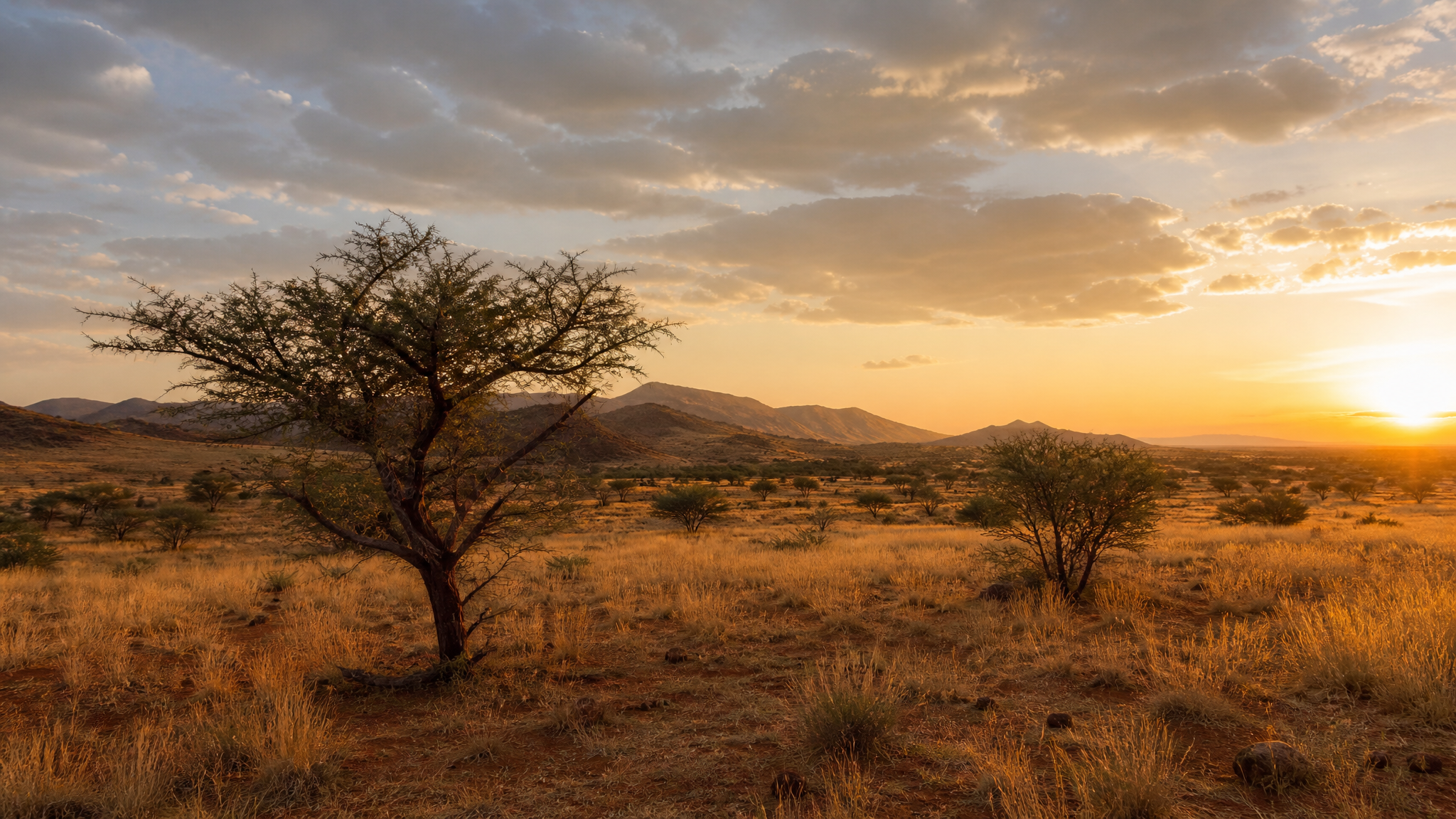
Restoring Namibia’s Rangelands through Durable Carbon Removal
BioVanguard Autonomy is developing high-integrity carbon-removal projects in Southern Namibia, starting with the durable terrestrial storage of invasive woody biomass to restore riverine ecosystems and create local livelihoods.
BioVanguard Autonomy • Phase 1: Terrestrial Biomass Storage
Biomass Storage
PermanenceDisplacing fire and decay by sealing invasive woody biomass in engineered, monitored terrestrial storage designed for centuries of carbon retention.
Fish River Restoration
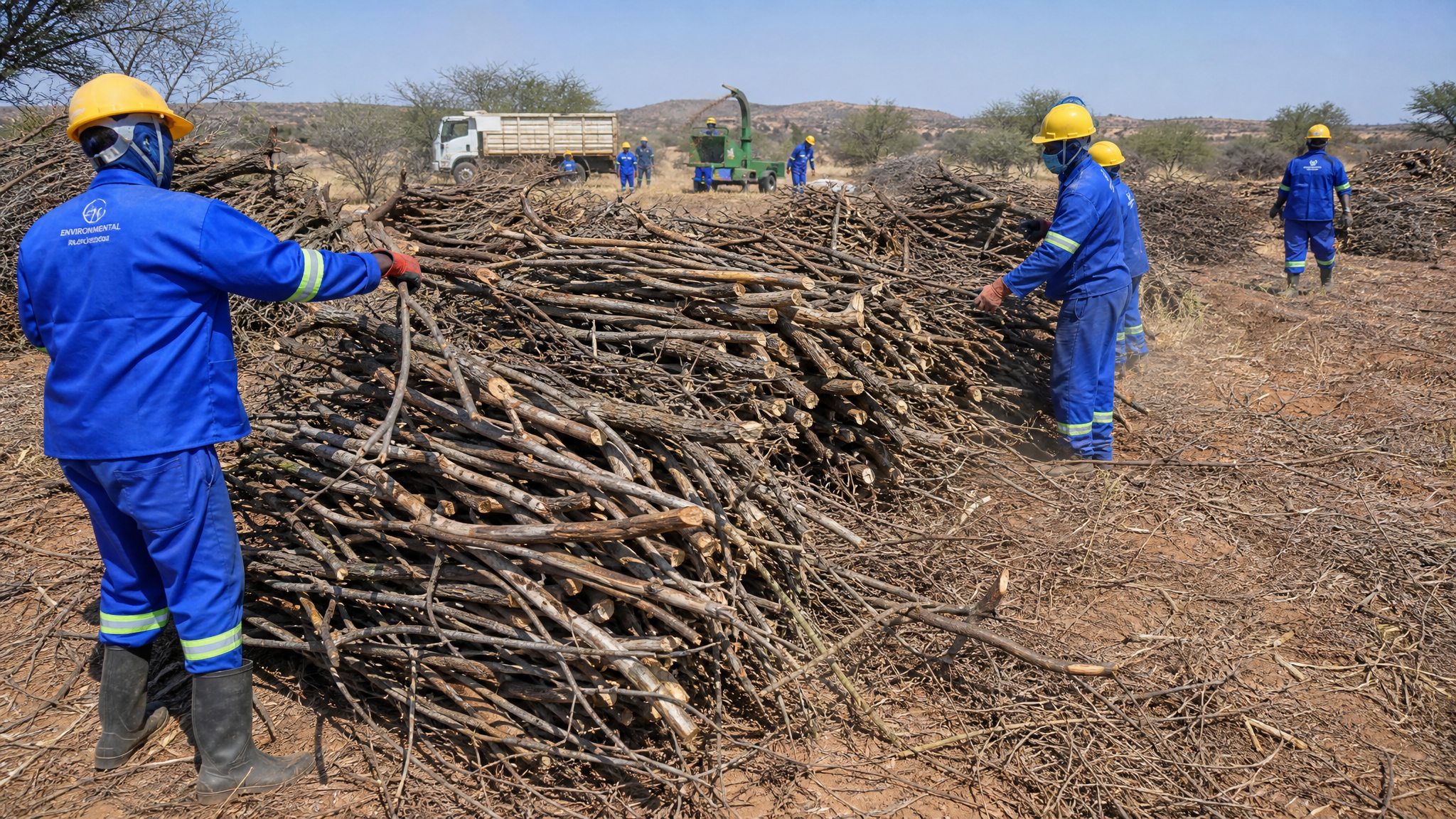
RestorationRemoving invasive Prosopis and reeds to mitigate flood risk, improve grazing productivity, and restore natural water flows.
Community Employment
LivelihoodsInjecting capital into the Hardap region through decentralised biomass collection and site operation partnerships.
Impact snapshot
The scale of invasive biomass in Namibia — and our pathway from pilot to durable, verifiable removals.
Pilot target per year (Year 1).
Scale target per year (5 years).
How it works
From invasive biomass sourcing to engineered terrestrial storage and verified carbon removal.
Source
Recovering invasive woody biomass (Prosopis and reeds) from the Fish River system that would otherwise be burned or left to rot.
Store
Placing biomass in engineered terrestrial storage cells, sealed to prevent moisture and oxygen from triggering decomposition.
Monitor & Verify
Utilising continuous sensor telemetry and independent third-party audits to verify storage integrity before credits are issued.
Why partner with us
Three complementary activity streams underpin a durable, investable carbon removal and restoration business.
Carbon Removal Credits
High-durability removal credits certified via the Rainbow Standard.
Restoration Services
Providing professional clearing of invasive species for landowners and government bodies.
Future Pathways
Assessing Biochar production for agricultural residues (maize/wheat) as a secondary developmental phase.
Proof & credibility
Following the Rainbow Standard Methodology for Terrestrial Biomass Storage. Actively engaging certification bodies and funders to bring a first-of-a-kind (FOAK) project to market.
Project currently in feasibility and pre-planning stage. Monitoring, reporting, and verification (MRV) systems are under development.
Let’s build durable removals together
Investors, buyers, certification bodies and research partners — request a meeting to discuss the Phase 1 TBS pilot.